
Design Intent vs Execution Reality: Closing the Gap in Retail Fixtures
How manufacturing precision and project discipline impact store performance
There is a phrase that anyone who has worked in retail design long enough has heard from a client standing in a newly completed store: "This isn't quite what I imagined." The renders looked right. The samples were approved. The brief was clear. And yet, something has been lost between the design file and the finished fixture. This gap — between design intent and execution reality — is one of the most persistent problems in retail fixture manufacturing. It is also one of the most preventable.
Where the Gap Begins
Design intent is expressed in renderings, material specifications, and technical drawings. Execution reality is shaped by who reads those drawings, what machinery is used to interpret them, what materials are actually available on the day of production, and how many hands a piece passes through before it reaches the store floor.
Each of these variables introduces the possibility of deviation. A router operator who interprets a drawing slightly differently. A finishing team that adjusts a colour mix when the original batch runs out. A site installer who makes a judgement call when a fixture doesn't fit as expected.
None of these individuals are acting in bad faith. But without tight process control, small deviations compound. By the time a fixture reaches its destination, it can carry the accumulated drift of a dozen small decisions made without sufficient reference to the original design.
The Role of Manufacturing Precision
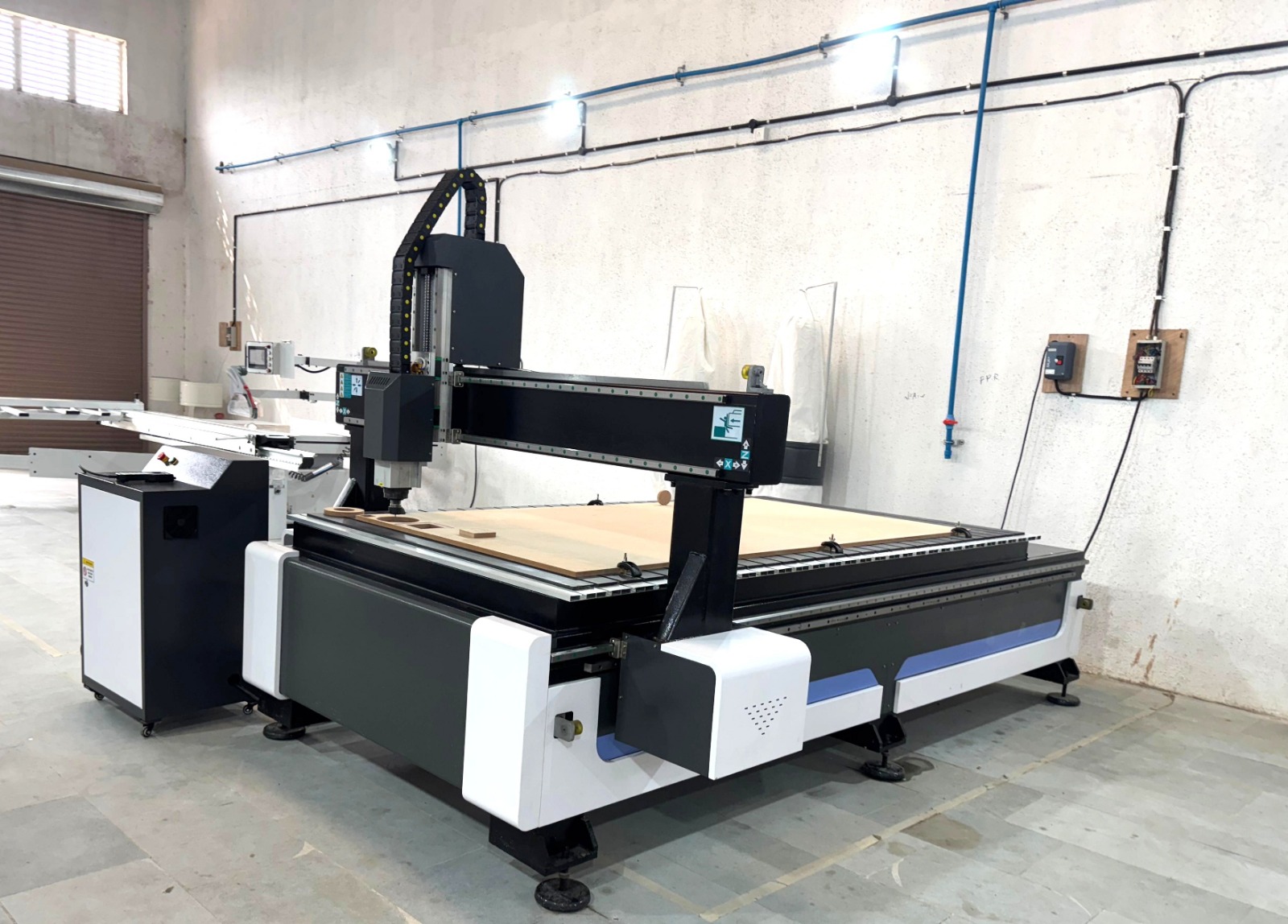
Closing this gap begins on the production floor, not on-site. When fixtures are manufactured using CNC routers, beam saws, and automated drilling systems, dimensional accuracy is built into the process rather than dependent on individual skill. Tolerances that matter — joint alignments, edge profiles, drill placements — are controlled mechanically, not by eye.
This is the difference between manufacturing and fabrication in the truest sense. Fabrication is the process of making something. Manufacturing, done well, is the process of making the same thing accurately, repeatedly, at scale.
For a brand rolling out across multiple stores, repeatability is everything. The fixture in Bangalore should be identical to the fixture in Delhi. Not approximately identical. Identical.
Prototyping as a Process Step, Not a Formality
One of the most effective ways to close the gap between intent and reality is to treat prototyping as a genuine decision point in the project — not a formality that exists to satisfy a client milestone.
A physical prototype, reviewed critically against the design brief, reveals what a render cannot. How does the material actually look under retail lighting? Does the joinery feel solid? Is the proportional relationship between elements what the designer intended? Are there assembly steps that will create problems at scale?
Answers to these questions, addressed before production begins, prevent expensive corrections after 200 units have been manufactured.
Project Discipline Across the Delivery Chain
Manufacturing precision alone is insufficient if project discipline breaks down between the factory and the store. Clear installation guidelines, pre-delivery quality audits, and photographic handover documentation are not administrative overhead — they are the mechanisms by which design intent is preserved through to the final installation.
When site teams are given detailed, unambiguous installation specifications, the risk of on-site improvisation drops significantly. When every completed installation is documented photographically and reviewed against the design reference, deviations are caught before they become normalised.
The Business Case for Getting This Right
A retail fixture that doesn't match design intent is not simply an aesthetic failure. It is a commercial one. Fixtures that are misaligned with shopper journey design underperform. Displays that don't meet structural expectations fail prematurely. Finishes that don't match brand standards erode the brand's retail credibility.
Closing the gap between design intent and execution reality is, ultimately, not a manufacturing problem — it is a business performance problem. And it deserves to be treated as one.
Partner with Agwan for your next retail project
For fixture manufacturing, store rollouts, or collaboration discussions — we welcome you to connect with our team.